

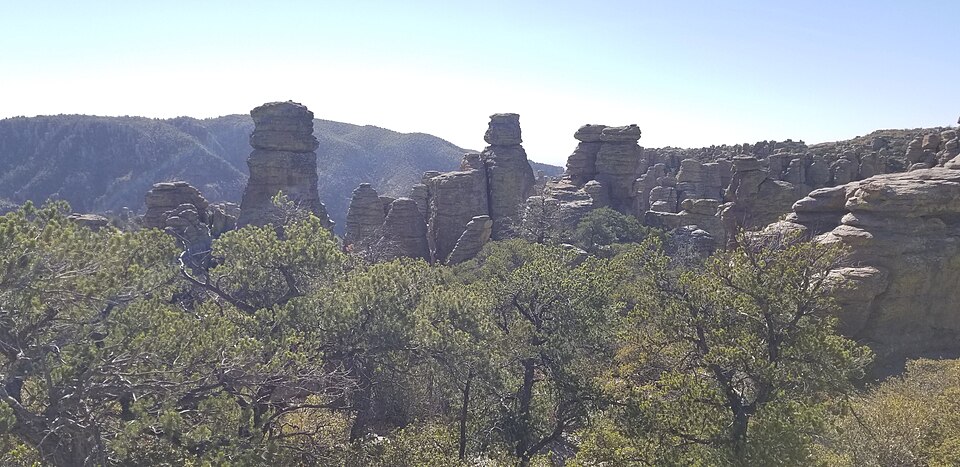
After more than a century as a national monument, one of southeastern Arizona’s most unusual landscapes has officially become a national park.
Arizona has no shortage of places worth exploring, but one of its most unique landscapes just received some long-overdue national recognition.
On October 20, 2026, Chiricahua National Monument officially became Chiricahua National Park, giving Arizona its fourth national park alongside the Grand Canyon, Saguaro, and Petrified Forest.
If you’ve never heard of Chiricahua, you might be wondering what makes it special. And if you’ve been there before, you’re probably wondering why it wasn’t already a national park.
Either way, there’s a lot more to this place than its new title.
Welcome to the Wonderland of Rocks
Tucked away in southeastern Arizona near Willcox, Chiricahua looks almost like something from another planet.
Towering columns of rock rise above the landscape. Massive boulders balance in seemingly impossible positions. Narrow passages wind between formations that have been shaped by millions of years of erosion.
The National Park Service describes the area as a landscape formed by volcanic activity roughly 27 million years ago.
The result is what has become known as the Wonderland of Rocks, a place where you can walk among some of the most unusual natural formations in the Southwest.
And this isn’t just another stretch of desert.
Chiricahua sits within one of Arizona’s famous sky islands, where changes in elevation create a surprisingly diverse combination of desert, grassland, woodland, and forest habitats.
That’s part of what makes Arizona such an incredible place to explore. You can spend years living here and still find landscapes that don’t look anything like the Arizona most people imagine.
A National Park More Than 100 Years in the Making
Although the national park designation is new, Chiricahua’s protected history goes back more than a century.
President Calvin Coolidge established Chiricahua National Monument on April 18, 1924.
The area also holds a much longer human history.
The Chiricahua Mountains are part of the homeland of the Chiricahua Apache, whose connections to this region extend back generations before federal protection.
The park also preserves the history of early ranching and settlement, including Faraway Ranch, a historic property that played a role in bringing visitors to the area.
With the passage of the Chiricahua National Park Act, the landscape now receives the national park designation, recognizing both its natural features and cultural significance.
What Can You Do at Chiricahua National Park?
The good news is that the new designation doesn’t mean visitors have to wait for the park to open.
Chiricahua was already open to the public, and the National Park Service says the park will continue offering outdoor recreation opportunities.
Hiking: The park has trails winding through its famous rock formations, including the Echo Canyon area and other routes through the Wonderland of Rocks.
Scenic drives: Visitors can explore Bonita Canyon Drive and take in elevated views of the mountains and rock formations.
Wildlife watching: Because of the park’s varied habitats, it’s an excellent place for birding and keeping an eye out for Arizona wildlife.
Camping: The park offers camping opportunities for visitors who want to spend more time exploring.
Stargazing: Its southeastern Arizona location also makes Chiricahua an appealing destination for experiencing the night sky away from major city lights.
Before making the trip, check current road conditions, campground details, trail information, and any restrictions through the National Park Service’s Chiricahua website.
Arizona Now Has Four National Parks
For a state already known for the Grand Canyon, adding another national park is a pretty significant milestone.
But I think what’s more interesting is what this recognition says about Arizona.
We have deserts, mountains, alpine forests, volcanic landscapes, deep canyons, and places like Chiricahua that almost defy description.
And there’s still plenty left to discover.
Chiricahua might have a new name and a little more national attention, but the rocks, trails, wildlife, and history were there all along.
Maybe this is just the recognition needed to encourage more people to look beyond the places they already know.
And beyond the cactus.
Sources and additional information
- National Park Service: Chiricahua Becomes America’s Newest National Park
- Official Chiricahua National Park website
- National Park Service: History and Management
- National Park Service: Photos and Multimedia