

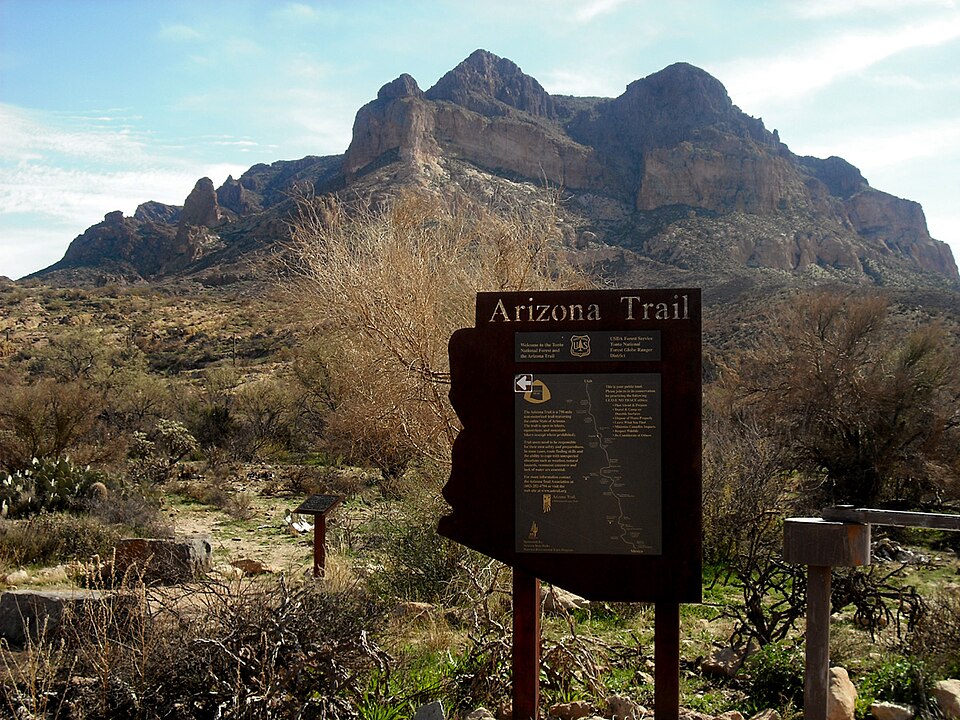
New research reveals just how many wild animals use the same paths traveled by Arizona hikers, cyclists, and horseback riders.
There’s something about hiking a quiet trail that makes you wonder what might be moving through the forest when nobody’s around.
You hear a branch snap somewhere off in the trees. Maybe you notice tracks in the dirt or catch something moving in the corner of your eye.
Most of the time, whatever made the noise disappears before you get a chance to see it.
But new research from Arizona State University is giving us a better look at the wildlife sharing some of Arizona’s most popular trails.
And there’s quite a bit more going on out there than most people realize.
More Than 500,000 Images Tell the Story
The Arizona National Scenic Trail stretches nearly 800 miles from the Mexican border to Utah.
Along the way, it passes through deserts, grasslands, mountains, forests, and some of the most remote terrain in the state.
It’s an incredible route for hikers, cyclists, and horseback riders.
But the trail wasn’t built through empty wilderness.
Researchers from Arizona State University worked with the Arizona Trail Association and the Arizona Center for Nature Conservation/Phoenix Zoo to examine how people and wildlife use the same landscape.
Over six years, wildlife cameras captured more than 500,000 images.
Those images documented 25 mammal species, including mountain lions, black bears, elk, deer, badgers, skunks, and foxes.
The research also included photographs of a white-nosed coati walking along the trail in the Huachuca Mountains.
For anyone who has spent time hiking in Arizona, it’s a fascinating reminder of how much wildlife can be around us without ever being noticed.
The Trail Isn’t Just for People
One of the interesting findings is that animals don’t necessarily avoid trails simply because people use them.
Some wildlife species travel along the same routes, although their activity patterns can vary.
Researchers found that certain animals, including deer and squirrels, showed activity periods that overlapped with human trail use.
Other species are more active at night.
That means the same trail can serve very different purposes depending on the time of day.
A hiker might enjoy a morning walk through the pines, while a black bear or mountain lion could travel through the area when fewer people are around.
And neither one necessarily knows what passed through earlier.
Why This Research Matters
This study isn’t just about collecting interesting photographs.
Understanding where animals travel, when they’re active, and how their movements overlap with people can help land managers make better decisions.
That might mean identifying areas where wildlife needs additional protection, improving visitor education, or considering animal movement when maintaining and designing trails.
Arizona’s outdoor recreation opportunities are a huge part of what makes this state special.
But keeping those places healthy means recognizing that we’re sharing them with wildlife.
And the animals were here long before many of our favorite trails became recreation destinations.
What It Means When You’re Out Hiking
For hikers, campers, and anyone spending time in Arizona’s backcountry, the research offers a useful reminder.
Pay attention to your surroundings.
Give wildlife plenty of space, avoid feeding animals, and keep food properly secured while camping.
If you spot an animal, enjoy the experience from a safe distance rather than approaching it for a photograph.
And if something moves through the brush nearby, remember that the animal is probably just going about its day.
There’s Always More Happening Than We See
One of the things I enjoy about Arizona is knowing there’s still so much to discover beyond the places we normally visit.
We might walk a trail and come away remembering the views, the trees, or the weather.
Meanwhile, a whole other world is moving through that same landscape.
The research is a pretty good reminder that the wilderness doesn’t belong to us just because we’re the ones maintaining the trail.
Sometimes we’re simply visitors passing through someone else’s home.
Sources
- Arizona State University: People Aren’t the Only Ones Using the Arizona Trail
- Arizona Trail Association
- Arizona Center for Nature Conservation / Phoenix Zoo