

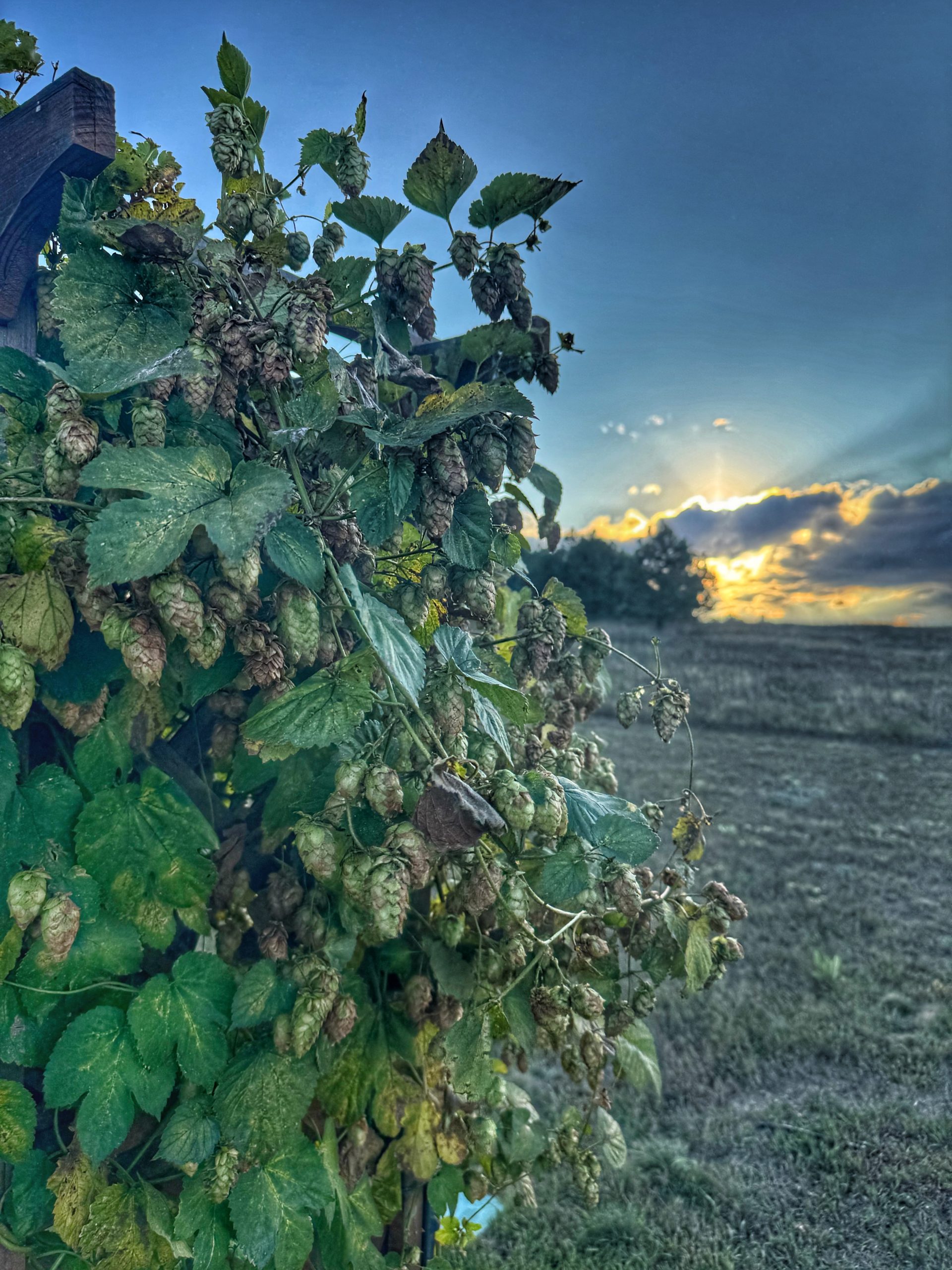
I’ve spent 15 years in the beer industry, so my interest in hops usually involves whatever’s being poured into a glass. But with fresh hop beer season here, I’ve got another idea.
I want to head out into Arizona and find them growing wild.
No grand brewing project. No secret recipe. I just want to see a plant I’ve spent years talking about in its natural surroundings. If that means spending a day wandering through some cooler, greener parts of Arizona, I’m pretty comfortable with that arrangement.
It feels like a fitting place to start From the Trail.
Arizona has wild hops?
It sure does. While hops might make you think of farms in Washington or Oregon, Arizona has native hops growing in its mountain woodlands and along streams.
One native western hop is commonly listed in botanical records as Humulus lupulus var. neomexicanus. SEINet’s botanical description places it in wooded areas and along streambanks in Arizona, generally between about 4,700 and 9,500 feet.
That gives this beer guy another reason to look beyond the desert floor.
Why fresh hop season got me thinking
The annual hop harvest brings a short window for beers that put freshly harvested hops front and center. Wet hop beers use undried hops rushed from the field to the brewery. Some brewers also use “fresh hop” for newly harvested hops that have been dried and used quickly, as Sierra Nevada explains in its harvest guide.
Spending so much time around the finished beer has made me curious about what’s growing out there before a brewery ever enters the picture.
Four Arizona places on my wild hop search list
These places have botanical records or published accounts of wild hops. Some records are decades old, so this is a starting point for exploring, rather than a promise that there’s a patch waiting around the next bend.
1. Oak Creek Canyon
This is where I’d start researching a first outing. The Sedona and Oak Creek Canyon flora checklist documents hops in Oak Creek Canyon and its tributaries, climbing through shrubs and trees near the water. It also notes less frequent occurrences farther down the Oak Creek corridor.
A creek, canyon scenery, and the possibility of finding hops? That gets my attention.
2. Water Canyon near Eagar
In eastern Arizona’s White Mountains region, a herbarium record available through SEINet documents native hops collected in Water Canyon, just south of Eagar, in July 1973.
It’s an old record, but a specific lead worth investigating. Finding out whether they’re still growing there would be part of the adventure.
3. Mount Lemmon and the Santa Catalina Mountains
Southern Arizona belongs on this list too. A CraftBeer.com story about wild hop research describes researchers collecting hop samples on Mount Lemmon in 2017.
The story also explains how isolated some Arizona populations can be. This would take a little homework and patience, which seems fair. Wild hops don’t come with a brewery sign pointing you toward them.
4. The Pinaleño Mountains
The University of Arizona’s Flora of the Pinaleño Mountains includes Humulus lupulus among the plants recorded in the range.
That puts the Mount Graham region on my broader research list. The checklist doesn’t provide a specific hop trail or patch, so I’d want to narrow this one down before planning a trip around it.
What I’m hoping to find
Hops climb through surrounding vegetation, with toothed, often lobed leaves. Female plants produce the familiar papery cones we associate with beer. Those are the details I’ll be watching for, with a field guide handy to help confirm what I’m seeing.
For this first search, the goal is photos and a closer look. I’ll check access and conditions before heading out, stay on permitted routes, and leave the plants growing where I find them.
I haven’t made this trip yet. This is the beginning: a short list, some curiosity, and a reason to get outside. My goal is to head up north the weekend of October 10th.
After years of finding hops on beer labels, I’d like to find them along an Arizona creek.
And if the day happens to end at a brewery, well, I’ve already established my qualifications.